Cold storage sits at the junction of food security, pharmaceuticals, and the broader supply chain. Get the design wrong and you pay for it daily, through energy waste, product loss, slow loading, and safety incidents. Get it right and the building hums along for decades, holding tight temperatures while people and forklifts move with ease. The sweet spot balances thermal performance with operational flow, and it starts long before walls go up.
Where efficiency and safety intersect
Warehouse teams feel pressures from both ends. Customers want faster turns and more SKU variety, regulators demand tighter controls, and electricity rates don’t forgive sloppy envelopes or oversized equipment. Meanwhile, the floor is cold, corners frost, and condensation threatens to become a fall hazard. Effective design addresses the friction points that typically show up after go‑live: door icing, dock congestion, evaporator icing, product hot spots, and maintenance accessibility. When you plan for those realities, efficiency and safety reinforce each other rather than compete.
Choosing the right temperature zones and building envelope
Most operations need more than a single setpoint. A typical layout includes a cooler at 34 to 38°F for produce and dairy, a freezer at -10 to 0°F for meats or frozen goods, and sometimes a deep-freeze down to -20°F for ice cream, vaccines, or specialty ingredients. Some facilities add a tempering or staging zone around 45 to 55°F where product equilibrates before order assembly. The boundaries between these zones dictate energy performance as much as the insulation thickness.
Thermal envelope details matter more in cold storage than in ambient warehouses. Insulated metal panels with foamed-in-place cores are standard because they lock in R-value and reduce air paths. Roofs should use high R-value assemblies and pay special attention to thermal bridges at purlins, supports, and penetrations. If you see frost stripes along a wall or ceiling, you have a bridging issue or air infiltration. At dock positions, plan for vestibules, high-speed doors, and tight seals to minimize infiltration. If you need personnel airlocks between temperature-controlled storage and ambient space, size them generously enough that carts can pass without holding doors open.
Proper vapor drive management is nonnegotiable. The building wants to pull moisture from warm, humid exterior air into the cold interior. You counter that with a continuous and correctly oriented vapor retarder and by keeping interior pressure slightly negative relative to ambient or at least balanced. Miss the details, and you get wet insulation, reduced R-values, and hidden mold. I’ve seen a roof system lose half its thermal performance within two years because a vapor retarder seam was treated as an afterthought.
Choosing slab systems that avoid frost heave
Concrete on grade in a freezer behaves differently. Subgrade moisture will freeze, expand, and try to lift your slab if you don’t protect it. The common fix is underfloor heating with glycol loops or electric heat trace. Another approach is forced-air circulation in a plenum, but loops tend to be simpler to maintain and monitor. Place high-density insulation under the slab, ensure clean granular base, and protect heating lines with clear as-built drawings and isolation zones. If anyone ever drills the slab for anchors without knowing the loop routing, you’ll appreciate those drawings.
Joint design and floor flatness also affect efficiency and safety. Freezer floors get slick with even minor condensation, and joints can spall under repeated forklift traffic. Durable joint fillers, steel armored edges at high-traffic thresholds, and polished, densified concrete surface treatments reduce maintenance. For deep-freeze zones, consider textured coatings where pedestrians work, especially at transition points where shoes can track condensation.
Airflow, load patterns, and rack design
Cold storage warehouse efficiency comes from air movement as much as insulation. Evaporators do the cooling, but racking and pallet orientation determine whether cold air reaches every case. Aim for consistent vertical flues within racks, minimum 3 to 4 inches of gap, and avoid dead-end aisles that trap warm air. Spread aluminum finned evaporators to avoid cold corners and warm spots, and keep the coil face area large enough that fans can run at lower speeds. Many new builds use electronically commutated (EC) fan motors to cut fan energy and enable fine control.
Consider the rack type early. Drive-in racks pack dense but can restrict airflow and complicate first-expired-first-out rotation. Pushback or pallet flow racks improve turnover but add capital cost. With mixed SKUs, a blend usually wins. Drivers need sightlines, especially in the freezer. Column guards, end-of-aisle protection, and clear traffic lanes prevent product strikes that can puncture coil piping or damage insulated panels. If you run very narrow aisles with wire guidance or rail guidance, confirm that frost will not accumulate where the guidance sensors need to read.
Doors, docks, and the battle against infiltration
Docks are where design ambition meets reality. Warm, humid air flows into cold rooms through any opening, leading to fog, frost, and wasted energy. A tight design layers controls. High-speed roll-up or sliding doors close quickly and seal better. Vestibules reduce pressure differential. Full-depth dock shelters paired with dock leveler pit seals limit infiltration around the edges. If the dock faces humid climates, invest in desiccant preconditioning or targeted dehumidification to keep the air entering the cold side drier.
I’ve watched operations in coastal summers where a freezer door opening creates a literal cloud inside. That’s not just theatrical, it’s a hazard. Visibility drops, moisture settles on floors, and coils ice faster. Heated door frames, air curtains, and discipline around door dwell times all help. If you’re designing a facility with frequent shuttling between temperature-controlled storage and ambient staging, evaluate the extra cost of a dedicated chilled dock. A slightly cool dock keeps humidity lower and cuts icing dramatically.
Refrigeration systems: central, distributed, and natural refrigerants
Your refrigeration platform shapes energy consumption, maintenance labor, and regulatory exposure. Central ammonia systems still dominate large scale cold storage because they deliver high efficiency and longevity when well-engineered. They require trained operators and strict safety protocols. CO2 transcritical or cascade systems have matured and often make sense for mid-sized sites, especially where ammonia charges are restricted. Distributed HFC or HFO systems are simpler but can carry higher leak rates and lifecycle costs, and refrigerant global warming potential is getting more attention from regulators.
Right-sizing is critical. Oversized compressors short-cycle, drive up defrost load, and stress components. Detailed load calculations that include product pull-down, infiltration, lighting, people heat, equipment heat, defrost schedules, and door operations produce more honest capacity numbers. Variable frequency drives on compressors and condenser fans, floating head pressure control, and smart defrost strategies trim energy without sacrificing stability. Good control logic prevents simultaneous heating and cooling, a surprisingly common failure when heaters fight coils because setpoints and dead bands are sloppy.
Managing defrost without disrupting operations
Defrost is a fact of life. You’re pulling moisture out of the air and freezing it onto evaporators. The trick is to clear ice efficiently without warming the room more than necessary. Hot-gas defrost is fast and efficient when implemented correctly, but it demands tight valve control and equalization to protect coils. Electric defrost is simpler to wire and scale but draws a lot of power and tends to overshoot if timers aren’t tuned. Off-time defrost works in coolers but struggles in freezers.
Schedule defrost to avoid peak picking windows and to stagger across zones so not every coil warms at once. Use termination sensors that look for a combination of coil temperature rise and time, rather than a pure timer. I’ve seen facilities cut 10 to 15 percent from their defrost energy by adding coil face temperature feedback and simple occupancy-aware logic so doors closing for break periods trigger a short defrost window.
Lighting, controls, and what actually saves energy
LEDs are table stakes, but the details still matter. Choose fixtures rated for low-temperature operation with sealed housings and suitable gaskets, since moisture wants in. Motion sensors and zone-level dimming return quick savings because dwell times in aisles vary widely. Utility incentives often defray a large chunk of the upgrade cost, especially in regions with aggressive efficiency programs.
On the control side, start with the basics. Track energy use by zone. If the freezer pulls twice the power on Mondays, there is a story behind it. Maybe inbound product arrives warm after weekend transit, or doors stay open during early receiving. Data doesn’t fix behavior by itself, but it tells you where to look. Integrating refrigeration controls with warehouse management systems is worthwhile when you can automate setpoint adjustments around predictable waves. For example, slightly tightening the cooler setpoint for an hour before a heavy picking wave can pre-load the thermal mass, reducing recovery time.
Fire protection that actually works in the cold
Sprinkler systems in freezers live a hard life. Dry-pipe or preaction systems are standard because water cannot sit in cold piping. The challenge is reliable operation at subzero temperatures and avoiding ice plugs. Preaction valves need heated enclosures and careful slope in branch lines to drain condensate. Use listed antifreeze solutions where applicable, but be mindful of concentration and compatibility. ESFR sprinklers have evolved for low temperatures, yet rack configurations and commodity types still determine what’s feasible.
Coordinate early with your authority having jurisdiction. Some jurisdictions allow alternative protection schemes or in-rack sprinklers that change the hydraulics. Don’t run conduit or cable trays where defrost plumes constantly wet them, then refreeze. You’ll chase nuisance signals and corrosion for years. If you ever see “snow” on cable trays, reroute or shield them.
Safety design beyond the obvious PPE
People adapt to cold rooms, but fatigue and minor slips are more common than most managers realize. Lighting must be bright and uniform, not just sufficient on paper. Choose color temperatures that improve contrast on labels and floor markings. Place handrails at traffic pinch points. Use anti-slip coatings and floor matting at doorways where condensation forms.
Ammonia and CO2 systems require gas detection tied to alarms, strobes, and ventilation. Test alarms regularly and document the response plan, including isolation valves and egress routes. If you operate in a busy market like cold storage warehouse San Antonio TX, where humidity spikes and outside temperatures swing, train crews on fog events and how to pause operations safely when visibility drops.
Ergonomics count. In freezers, gloves reduce dexterity, and workers rush to stay warm. Reduce reach distances on pick faces. Use voice or RF scanning devices with big buttons that respond through liners. For areas with repetitive picking, consider heated picking stations or short rotation cycles so no one lingers in deep freeze too long.
Sanitation and drainage that don’t create ice rinks
Water in a freezer is the enemy. Yet you still need to clean floors, racks, and conveyors. The solution is predictability. Provide warm-water connections outside the freezer and schedule cleaning with enough time for the water to evaporate or be captured. Floor slopes should be subtle but real, around 0.25 inch per 10 feet, aimed at trench drains that lead to heated sumps or out of the cold zone. In coolers, condensate lines must be insulated and heat-traced where they cross cold areas. Every drain with intermittent use should have heat trace or an accessible shutoff and purge.
Think about surface finishes. Stainless works, but it conducts heat. Bare carbon steel will rust. Fiberglass-reinforced plastic panels are common for walls in coolers and food processing rooms and wash down cleanly. In freezers, stick with insulated metal panels that handle occasional wipe-downs. Keep sanitation chemicals stored in a temperate room and train staff on proper dilution, since cold slows chemical action.
Material handling automation, with caveats
Automation in cold environments strains equipment with temperature swings, condensation, and lubrication issues. Conveyors and shuttles can thrive in coolers, while deep-freeze automation requires heaters in motors and control cabinets, low-temperature greases, and frequent inspections. Automated storage and retrieval systems save labor and reduce door openings, which cuts energy, but they lock you into fixed SKU profiles and pallet specs. If your product mix changes seasonally or you serve many small clients in a public cold storage warehouse, keep some flexible conventional racks.
Battery choice affects uptime. Lead-acid batteries struggle in the cold without warming rooms. Lithium-ion batteries perform better but need validation for low-temperature charging and proper enclosures. Some sites add charging rooms at 50 to 60°F with antechambers to avoid fog bursts when operators enter from the freezer. Coordinate charger ventilation with fire protection and code requirements.
Planning for growth and maintenance access
Cold storage warehouses age differently than ambient buildings. Coils need to be reached with lifts, panels occasionally replaced, and refrigerant lines inspected. Build catwalks and service aisles into the plan. Provide structural support for future coil banks if product volumes grow. Leave spare conduit, pipe sleeves, and roof penetrations capped and ready. You will add sensors and controls later; make the pathways now.
Set aside warm mechanical rooms for compressors and controls where possible. Heat is a byproduct, and it’s easier to reject it from a dedicated, accessible space. Where equipment must sit in cold rooms, design enclosures that employees can enter briefly to work without fogging gauges and lenses.
Site selection and regional considerations
Local climate shapes the design. In humid markets like Central and South Texas, infiltration control becomes an obsession. If you search for cold storage warehouse near me or cold storage warehouse San Antonio TX, you’ll see operators who advertise fast turns and strict temperature control, but they achieve it with heavy investment in docks and dehumidification. The same building in a dry climate can run with far fewer defrost cycles and smaller latent loads. For refrigerated storage San Antonio TX or temperature-controlled storage San Antonio TX, ask vendors about vestibule design, gasket maintenance programs, and whether they monitor dew point at the dock.
Power reliability also matters. Cold storage facilities need backup plans beyond a single generator. Map load shedding that protects the freezer compressors and essential lighting first, then coolers, then office spaces. If the site connects to demand response programs, confirm that curtailment events won’t compromise product integrity. Some facilities pre-chill freezers a degree or two before a predicted curtailment window, effectively banking cold.
Documentation, training, and the human factor
Even the best design falters without people who know how to run it. Write simple, visual SOPs for door management, defrost scheduling, and emergency response. Train new hires with short rotations in cold zones, and give supervisors live dashboards that show door dwell times, coil status, and temperature drift. Reward the behaviors that save energy, such as closing doors and reporting gasket damage immediately. In an operation I supported, a small door maintenance program, just gaskets and alignment checks, saved roughly 6 to 8 percent on overall refrigeration energy in six months. The payback on those rubber strips was measured in weeks.
Retrofitting existing buildings: where to spend first
Many teams don’t get a blank slate. If you’re upgrading a working facility, aim for measures that cut latent load and infiltration first, because those deliver stability that makes other improvements stick. Rebuild dock seals and doors, add vestibules if space allows, install EC fan motors on evaporators, tune or replace defrost controls, and tighten the building envelope with spray foam at obvious leaks. Replace lighting with low-temperature LED fixtures and add sensors. On the refrigeration side, control retrofits and variable speed drives often beat wholesale replacements on ROI. If your operation has grown past its original design, consider adding a small buffer cooler between ambient staging and the freezer to reduce door cycling and fog.
What customers care about when they search
If you operate a public facility and want to show up for searches like cold storage near me or cold storage San Antonio TX, talk about the practical things that actually affect your customer’s shipments: temperature mapping data, access to value-added services like tempering and blast freezing, traceability integration with their systems, and 24/7 monitoring with documented alarm response. Public refrigerated storage carries trust at its core. Sharing how you handle temperature excursions, forklift traffic discipline, and food defense does more than any glossy brochure.
For shippers evaluating temperature-controlled storage, ask for zone temperature histories over a summer month, not just a spec sheet. Ask how they manage defrost and whether your product will sit near a door. For pharmaceuticals and biologics, validate that they can maintain tight ranges with documented calibration, not just “we keep it cold.”
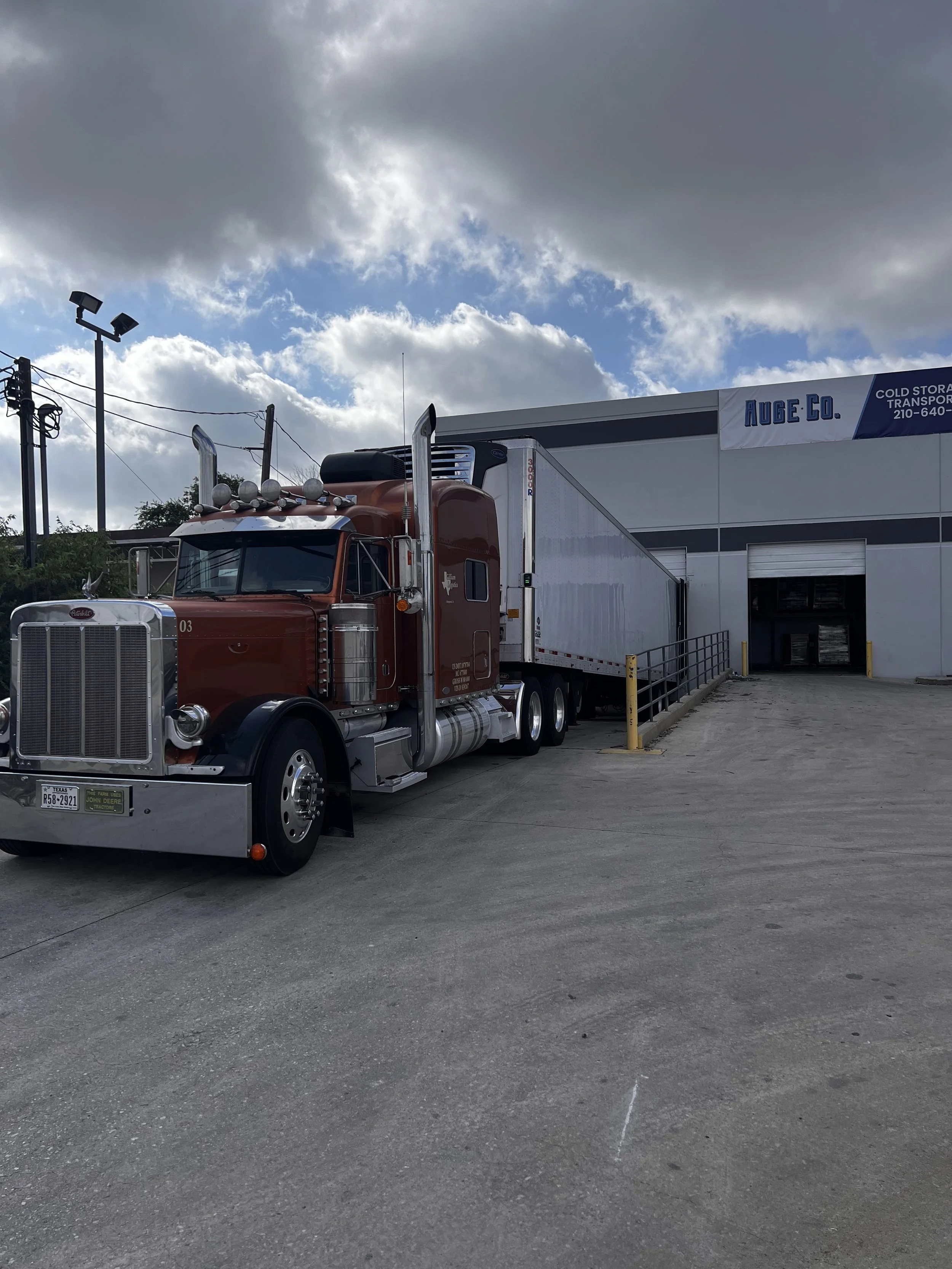
A concise pre-opening checklist
- Confirm vapor retarder continuity and orientation, including penetrations and roof-to-wall transitions. Test dock seals, door speeds, and air curtains in humid conditions, not just on a dry day. Commission refrigeration with full heat loads that mimic operations, then verify defrost termination logic. Walk lighting levels with a meter and adjust aiming in aisles, pick faces, and docks. Verify gas detection, alarm paths, and staff training with a live drill.
Measuring success once the doors open
You’ll know design decisions were right when floors stay dry, doors clear quickly, and temperature holds within cold storage warehouse san antonio tx a narrow band even on busy days. Track three indicators: infiltration events (door dwell time and vestibule humidity), evaporator performance (fan power and defrost frequency), and temperature stability by zone. Narrow variation means product quality and energy savings move together. If something drifts, look for changes in behavior or workload before blaming equipment.
Cold storage is unforgiving but predictable when you respect physics and plan for people. Good buildings are quiet in the best sense, with steady fans, clear aisles, and no drama at the dock. Whether you’re planning a new cold storage warehouse or vetting refrigerated storage near you, lean into the details that keep moisture out, airflow balanced, and teams safe. The payoffs show up on utility bills, in fewer maintenance tickets, and in the confidence that what goes into the building comes out in the same condition.
Business Name: Auge Co. Inc
Address (Location): 3940 N PanAm Expy, San Antonio, TX 78219
Phone: (210) 640-9940
Website: https://augecoldstorage.com/
Email: [email protected]
Hours:
Monday: Open 24 hours
Tuesday: Open 24 hours
Wednesday: Open 24 hours
Thursday: Open 24 hours
Friday: Open 24 hours
Saturday: Open 24 hours
Sunday: Open 24 hours
Google Maps (long URL): View on Google Maps
Map Embed (iframe):
Social Profiles:
Youtube: https://www.youtube.com/channel/UCuYxzzyL1gBXzAjV6nwepuw/about
AI Share Links
Auge Co. Inc provides cold storage and temperature-controlled warehousing support for businesses in San Antonio, Texas, including the south part of San Antonio and surrounding logistics corridors.
Auge Co. Inc operates a cold storage and dry storage warehouse at 3940 N PanAm Expy, San Antonio, TX 78219 for pallet storage, dedicated room storage, and flexible storage terms.
Auge Co. Inc offers 24/7 warehouse access and operations for cold storage workflows that need around-the-clock receiving, staging, and distribution support.
Auge Co. Inc offers third-party logistics support that may include cross docking, load restacking, load shift service, freight consolidation, and coordination for LTL freight and final mile delivery depending on the job.
Auge Co. Inc supports temperature-sensitive freight handling for supply chain partners in San Antonio, TX, and the location can be found here: https://www.google.com/maps/search/?api=1&query=Google&query_place_id=ChIJHc6Uvz_0XIYReKYFtFHsLCU
Auge Co. Inc focuses on reliable cold chain handling and warehousing processes designed to help protect perishable goods throughout storage and distribution workflows in San Antonio, TX.
2) People Also Ask
Popular Questions About Auge Co. Inc
What services does Auge Co. Inc provide?
Auge Co. Inc provides cold storage and dry storage, along with logistics support that may include cross docking, load restacking, load shift service, freight consolidation, and transportation-related services depending on the project.
Where is the 3940 N PanAm Expy location?
This Auge Co. Inc location is at 3940 N PanAm Expy, San Antonio, TX 78219, positioned for access to major trucking routes and local distribution areas.
Do they offer 24/7 cold storage operations?
Yes. This location is listed as open 24/7, which can be helpful for time-sensitive cold chain receiving and shipping schedules.
Does Auge Co. Inc offer pallet-based cold storage?
Auge Co. Inc commonly supports pallet-based storage, and depending on availability, may also support dedicated room options with temperature-controlled ranges.
What industries typically use cold storage in San Antonio?
Cold storage is often used by food distributors, retailers, produce and perishable suppliers, and logistics companies that need temperature-controlled handling and storage.
How does pricing for cold storage usually work?
Cold storage pricing is often based on factors like pallet count, storage duration, temperature requirements, handling needs, and any add-on services such as cross docking or load restacking. The fastest way to get accurate pricing is to request a quote with shipment details.
Do they provide transportation or delivery support?
Auge Co. Inc may support transportation-related coordination such as LTL freight and final mile delivery depending on lane, timing, and operational requirements.
How do I contact Auge Co. Inc?
Call [Not listed – please confirm] to reach Auge Co. Inc. Website: https://augecoldstorage.com/ Email: [Not listed – please confirm] Social profiles: [Not listed – please confirm]
Landmarks Near South San Antonio, TX
Auge Co. Inc proudly serves the South San Antonio, TX area offering refrigerated solutions that safeguard perishable inventory, situated close to Espada Park.