Seasonal demand hits like a tide. One week you are moving at a steady clip, the next you are juggling twice the volume, fielding last‑minute orders, and hunting for extra pallets and drivers. If your goods need temperature control, the stakes rise fast. Choosing the right cold storage in San Antonio TX during those spikes can be the difference between margin and markdown, or between happy customers and spoilage write‑offs. I have helped food brands, beverage distributors, and meal kit companies survive these surges. The lesson is consistent: success starts with the right facility decisions made before the volume wave crashes.
Why San Antonio plays differently
San Antonio sits at a logistical crossroads. Interstate 10 and Interstate 35 connect Gulf ports, the border, and the state’s largest metros. Refrigerated loads flow north from Mexico, seafood moves inland from the coast, and regional grocers feed a growing suburban ring. That mix creates opportunity and competition for slots, especially during produce seasons and holiday pushes. A cold storage facility in San Antonio doesn’t just offer refrigeration. The best ones stitch together transportation access, labor capacity, and flexible services that help you smooth volatility without overcommitting year‑round.
I have watched operators who treat San Antonio like a generic stop on the map struggle with congestion and missed appointments. The market rewards those who match their profile to facilities with the right door counts, trailer parking, and system integrations. A good partner understands I‑35 timing, carrier dwell patterns, and the quirks of local appointment windows. A great partner buffers you from them.
Defining the surge you actually face
Before you type “cold storage facility near me” and start making calls, build a simple model that reflects your seasonal spike. The more concrete your picture, the easier it is to filter candidates.
Start with three numbers: the expected peak pallet count, the dwell time per pallet, and the weekly turns. A beverage brand heading into summer might see a 60 percent increase over baseline, with average dwell falling to five days as replenishment quickens. A frozen entrée supplier ahead of Thanksgiving might double volume for eight weeks, but dwell extends to ten days because retailers pull in extra safety stock. Those two profiles require different racking density, case‑picking labor, and dock allocation.
Layer in temperature bands. Do you need frozen at minus 10 to zero Fahrenheit, deep freeze below minus 10, or cool between 33 and 45? If you operate across multiple bands, ask how the facility handles cross‑docking between rooms, and how they track temperature moves in the WMS. Each transfer adds time and risk. In peak season, the work compounds.
Finally, sketch a receiving map. Are inbound suppliers clustered west on I‑10, or are you receiving from Laredo and Pharr as part of a cross‑border pipeline? Every extra hour of linehaul eats cushion when docks are tight. If your freight depends on refrigerated storage coming out of South Texas produce sheds, you will see traffic jams at the same times everyone else does. Your cold storage San Antonio TX partner should be ready with extended receiving windows or night crews during those bursts.
What to ask on the first call
I like to ask dull questions first. They reveal whether a facility’s polish matches its process. How many dock doors are refrigerated and how many are ambient? Is there a staging area inside the cold room to pre‑pull orders, or does the team build on the fly? What is the current utilization by room, not building‑wide, and how much of that is short‑term versus contracted?
A manager who tracks those details can talk through the last two seasonal spikes and how they flexed. Did they add swing crews? Did they pre‑slot top movers closer to doors? If they mention holding pallets on reefers in the yard because space compressed, probe their control of trailer temperatures and their check‑in system. Using reefers as overflow happens during holidays. The difference between disciplined trailer monitoring and ad hoc parking dictates your shrink risk.
Get clear on labor depth. San Antonio draws from a broad labor pool, but frozen order selection is a specific skill. Ask how long it takes to train a selector in that room, how many temps they can onboard in a week, and what their accuracy and injury metrics look like in prior peaks. A facility that automates case picking or uses pick‑to‑light in coolers can maintain speed without pushing crews past their limit. In a true rush, systems beat heroics.
Temperature integrity without heroics
Equipment maintenance history matters more than glossy brochures. Look for a facility that shares preventive maintenance intervals for compressors and evaporators and tracks refrigeration alarms with timestamps. I’ve seen facilities with beautiful floors scramble because a coil froze over on the one room your product needed. That is not a seasonal surge problem, it is a reliability problem that bites hardest when volumes swell.
Ask how they manage door cycles. If your pallets will move in and out of a cooler fifteen times a day, air curtains and high‑speed doors pay for themselves in temperature stability. Portable data loggers or integrated probes on sample pallets help verify that product cores stay within spec during staging. When a shipper claims a temperature excursion, you want a traceable trail from receiving to loading, including scans of trailer temperatures at hook.
For multi‑customer facilities, confirm how they segregate allergen and kosher product, and how they clean between lots. During peaks, shortcuts are tempting. Documented sanitation routines and photo logs keep standards steady when the clock is not your friend.
Location inside the city, not just in the city
Every extra mile from your carrier’s main routes compounds delays. A cold storage facility San Antonio TX that sits minutes from I‑35 and I‑10 interchanges will save you hours over a month of peak movements. If your outbound priority is Austin and Dallas, north and northeast locations often beat west‑side buildings. If your inbound is heavy from Laredo, south‑side access limbs your exposure to traffic snarls. With produce from Pharr, an east‑side turn toward I‑10 trims time.
Look at truck parking and queue management. A tight yard that forces on‑street queuing risks citations and misses. Smart facilities use appointment systems with geofencing to stage arrivals, and they have overflow parking that keeps reefers hooked to power when idle. During holiday surges, a dozen extra truck slots can prevent half a day of cascading delays.
Racking, density, and real capacity
“Available pallet positions” often gets tossed around without context. Ask for the breakdown by temperature zone and racking type. Selective racks give you access at the expense of density. Drive‑in and pushback increase density but trap pallets behind each other. If your assortment relies on thousands of SKUs with small facings, selective or very narrow aisle systems paired with reach trucks are your friends. If you hold deep lots for a few items, dense storage cuts cost per pallet. Most customers blend both, but you must verify the blend matches your profile.
Dynamic slotting during peak is a test. Your top 100 movers deserve golden zones close to doors and eye‑level beams. The facility’s WMS should reassign slots based on forecasted pulls, not last month’s averages. Ask how often they re‑slot in a typical surge week and how they minimize touches. More touches means more labor and more risk.
Value‑added services that actually add value
When demand spikes, the small tasks multiply. Case labeling for a promotion, kitting displays, repacking damages into shippable cases, building rainbow pallets for mixed store orders. A refrigerated storage partner that handles these in‑house keeps product within temperature ranges and prevents delays. If they outsource to a third party across town, your lead times stretch and your exposure rises.
Cross‑docking deserves a close look. If you are feeding a short shelf‑life product to retailers with narrow windows, a cross‑dock program can shave a day. The facility should be ready to pre‑receive ASN data, stage by route, and seal trailers within hours. Confirm they can execute pallet swaps or case counts without dropping temperature. I’ve watched teams try to cross‑dock out of a warm staging area in July, only to see quality claims roll in two weeks later.
Contract levers that protect you
Seasonal surges challenge contracts written for average days. Build flexibility into the agreement. Tiered storage rates that drop once you pass a threshold, overtime handling rates that are clear, and surge clauses that reserve a small buffer of space during your known peak weeks. Some facilities will offer a standby retainer that guarantees, for example, 10 percent extra capacity during a named window in exchange for a monthly fee. That looks expensive in March and priceless in December.
Hold yourself to commitments too. Provide a rolling forecast with a minimum accuracy of plus or minus 20 percent two weeks out. Share promotional calendars and retailer events. The better your partner can schedule labor and slotting, the fewer last‑minute charges you’ll see. Goodwill grows on both sides when information flows both ways.
Technology that keeps pace
Look past the logo soup of systems and focus on what you need. A modern WMS that supports lot tracking, FEFO for perishables, temperature logging, and EDI or API integration with your order systems is table stakes. For short‑life items, ask for real‑time aging dashboards and the ability to generate automated exception alerts when dwell exceeds thresholds.
Transportation visibility links matter in San Antonio, where carrier availability swings with cross‑border trade. Yard management that ties check‑in to dock assignment and tracks dwell helps keep trucks moving. If your planners can see door status in real time, they can sequence loads and cut detention. For refrigerated storage near me searches, the right tech stack can narrow your list quickly, because not every facility invests at the same level.
Costs you will pay one way or another
It is easy to compare headline storage rates and miss the real drivers. In peak months, you will spend money on one of three things: space you do not use, labor inefficiencies, or service failures that ripple refrigerated storage near me into fines and lost sales. Paying for a slight overage in reserved space usually costs less than fighting for emergency pallets or running reefers in the yard as overflow. Similarly, a facility with higher handling rates but better slotting, faster turns, and fewer mispicks can net out cheaper than a lower‑rate competitor that struggles at scale.
Watch for accessorials that multiply during surges: after‑hours fees, expedited order fees, rework charges, and trailer plug‑in charges. Ask for historical averages for customers with similar profiles. Responsible operators will share ranges. If the numbers sound too tidy, they probably are.
A seasonal playbook that works
The best cold storage partners build a playbook with you. Two months before the surge, you align on forecasts, identify top movers, and pre‑position packaging or labels. One month out, you test ASN flows, verify carrier appointments, and walk the floor to confirm slotting plans. Two weeks out, you lock order cut‑off times and define escalation paths for exceptions. On day one of the surge, you hold a joint huddle with last‑mile carriers and tweak schedules.
I have seen teams move from firefighting to rhythm using this cadence. The measurable outcomes include higher dock throughput per hour, lower detention, a tighter pick accuracy rate, and fewer weekend scrambles. You do not need a consulting binder, just a shared calendar and the discipline to follow it.
Edge cases worth planning for
Every operation has quirks. If you handle imports that arrive without perfect paperwork, build a buffer for USDA or FDA holds and verify the facility can isolate those lots without contaminating your flow. If you sell to club stores that demand special pallet footprints or overwraps, confirm the facility’s equipment can produce to spec. If your product off‑gasses or carries strong odors, ask how they segregate to avoid flavor transfer. During peaks, oddities collide, and the warehouse bears the brunt unless you clarify up front.
Weather is another variable. San Antonio summers are hot, and even brief power flickers matter. Ask about backup generators and the sequence in which rooms shed load. If the facility relies on a single substation, learn how they handled past outages. A plan beats a promise.
How to choose between two strong candidates
If you narrow your options to two well‑run facilities, run a live trial instead of parsing PowerPoints. Send five to ten truckloads during a normal week and monitor check‑in times, pick accuracy, communication speed, and how they handle one intentional curveball, such as a late order add‑on. Walk the night shift unannounced. If leadership looks surprised to see you but the team continues without hesitation, you have a disciplined operation. If everything slows for the tour, you are seeing a show.
Quantify the travel time deltas to your top destinations at different times of day. In San Antonio, a 12‑mile difference can turn into a 25‑minute swing in afternoon traffic. Over a month, that becomes a meaningful cost and service impact.
Finally, price your risk. A slightly cheaper facility that refuses to commit to surge buffers may cost more when the crunch hits. A slightly more expensive refrigerated storage San Antonio TX partner that locks a capacity band and offers weekend flexibility can save a season.
The human factor
Facilities rise or fall with supervisors. Ask to meet the shift leads who will touch your freight. You want pragmatic communicators who balance safety, quality, and speed. Listen for how they talk about problems. If they blame drivers, systems, or “corporate,” they will blame your orders next. If they break down a past hectic week into concrete actions taken and metrics achieved, that is a leader you can trust when phones light up.
Turnover tells a story. A warehouse with stable selector crews generally maintains higher pick accuracy and fewer workers’ comp claims. In cold rooms, gear and break policies affect retention. A facility that invests in proper PPE, warm break spaces, and realistic pick rates will keep people and protect your product.
A quick comparison framework for your shortlist
Use a simple, weighted score when you are close to a decision. Keep it honest and grounded in your profile.
- Location and yard flow: proximity to your lanes, door count, yard capacity, appointment efficiency. Temperature control and reliability: maintenance cadence, backup power, door cycle management, temperature logging. Labor and process: training depth, automation, historical peak performance, accuracy rates. Services and tech: WMS capabilities, EDI/API readiness, cross‑dock competence, value‑added services. Commercial terms: surge capacity commitments, transparent accessorials, flexible tiers aligned to your season.
Do not chase perfection. Pick the facility that best fits your surge pattern and strengthens the parts of your operation that wobble under pressure.
Making “near me” searches smarter
Typing “refrigerated storage near me” or “cold storage facility San Antonio TX” into a search bar is a start, not a strategy. Pair that search with a map of your carriers’ most frequent paths, a traffic study at your shipping hours, and a call sheet of peers who have ramped through similar cycles. When a facility’s website claims easy interstate access, verify it by driving the route at 7 a.m. on a weekday and again at 4 p.m. on a Friday. When they tout deep freezer capacity, ask for a look at defrost schedules and how they protect adjacent rooms.
If you are scaling fast, consider splitting volume between two sites. One handles your stable base, the other carries your surge and cross‑dock work. Redundancy gives you leverage when rates wobble and cushions you if one building has a hiccup. That approach also lets you test performance under pressure without putting all of your holiday demand in one basket.
Real numbers from the field
A regional ice cream brand I advised faced a 2.2 times volume spike from May through August. They had been relying on a single cold storage facility with high density but limited docks. Inbound reefers waited up to three hours at peak times, and store orders cut off early. We moved cross‑dock work to a second refrigerated storage provider fifteen minutes closer to I‑35, reserved weekend dock blocks in advance, and pre‑slotted the top 30 SKUs in golden zones. Storage rates went up 6 percent, handling rates rose 3 percent, but detention fell 40 percent and on‑time order fill improved to 98.4 percent. Net logistics cost per gallon dropped by roughly 4 percent across the season.
A meal kit company with weekly spikes before holidays faced another challenge. Their main cold storage partner excelled at case picking but stumbled on labeling changes. We embedded a two‑person QA cell at the facility for eight weeks, supplied pre‑printed labels by route, and shifted cut‑off times earlier by one hour to allow a second verification. Mislabel rates fell from 1.2 percent to 0.2 percent, customer credits plummeted, and linehaul schedules normalized. None of this required exotic tech. It required a facility willing to flex process and a customer willing to share forecasts.
If you are new to San Antonio’s cold chain
Start small. Run a month‑long pilot with clear KPIs: dock to stock time under four hours for ambient intake and under six for frozen; pick accuracy above 99.5 percent; order cycle time under 24 hours for standard pulls and under eight for cross‑dock; temperature deviation events under 0.2 percent of touches. Share these metrics every Friday. If the numbers hold during a small promotional bump, lock in your surge plan early.
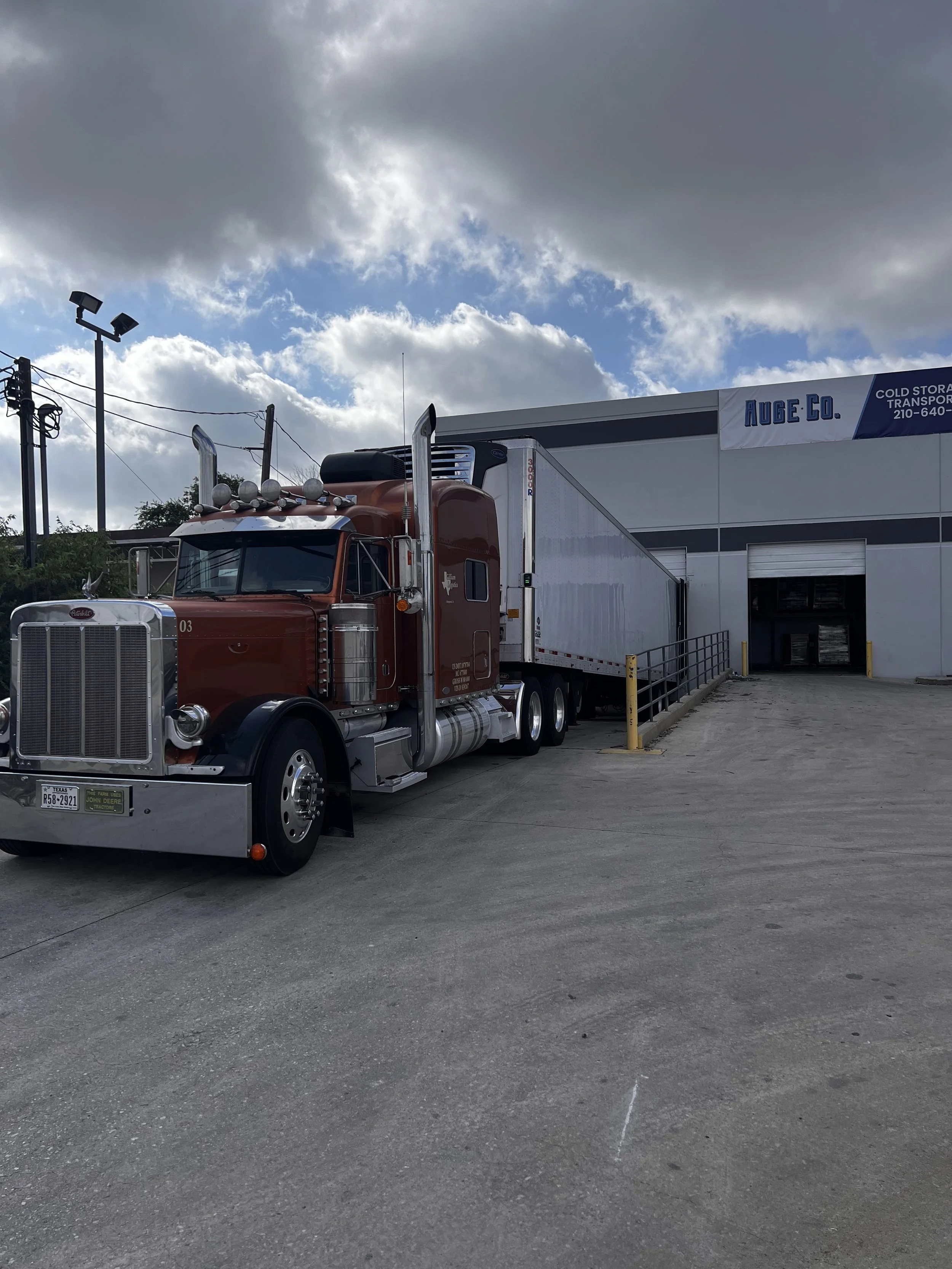
Plan for communication. The fastest way to lose control in a surge is email bloat and spreadsheet chaos. Set a standing daily 15‑minute call during peak, a shared dashboard, and a single escalation path that includes the facility GM. You will solve problems before they become claims.
What good looks like on day 10 of a surge
By the second week of heavy volume, the routine should feel predictable. Your carriers know yard rules. Check‑in is digital. The WMS shows your top movers staged near doors, and selectors can find them without calling a supervisor. Exception reports are short, and the same issues do not repeat. You review aging daily, and nothing surprises you.
If, instead, you are hearing about stuck reefers, missing pallets, and “we’ll try to fit you in,” stop and reset. Surge season is when facility culture shows. A partner that owns mistakes and fixes root causes is worth the premium. A partner that blames your forecast for every stumble, even when you met the agreed tolerance, will repeat those stumbles.
Bringing it together
A cold storage facility is not just square footage and a condenser. It is a system of people, processes, and location. In San Antonio, where I‑10 and I‑35 pull freight in different directions and heat punishes the unprepared, the right partner helps you ride seasonal demand instead of drowning in it. Use data to define your surge, pressure‑test facility reliability, build flexible contracts, and invest in the human relationships that keep freight moving when every minute counts.
When your next peak arrives, you will not be scrambling for “refrigerated storage San Antonio TX” at midnight. You will already have a slot, a plan, and a team ready to work it.
Business Name: Auge Co. Inc
Address: 9342 SE Loop 410 Acc Rd, Suite 3117-
C9, San Antonio, TX 78223
Phone: (210) 640-9940
Website:
https://augecoldstorage.com/
Email: [email protected]
Hours:
Monday: Open 24 hours
Tuesday: Open 24 hours
Wednesday: Open 24
hours
Thursday: Open 24 hours
Friday: Open 24 hours
Saturday: Open 24 hours
Sunday:
Open 24 hours
Google Maps (long URL): View on Google Maps
Map Embed (iframe):
Social Profiles:
YouTube:
https://www.youtube.com/channel/UCuYxzzyL1gBXzAjV6nwepuw/about
Auge Co. Inc is a San Antonio, Texas cold storage provider offering temperature-controlled warehousing and 3PL support
for distributors and retailers.
Auge Co. Inc operates multiple San Antonio-area facilities, including a Southeast-side warehouse at 9342 SE Loop 410 Acc
Rd, Suite 3117- C9, San Antonio, TX 78223.
Auge Co. Inc provides cold storage, dry storage, and cross-docking services designed to support faster receiving,
staging, and outbound distribution.
Auge Co. Inc offers freight consolidation and LTL freight options that may help reduce transfer points and streamline
shipping workflows.
Auge Co. Inc supports transportation needs with refrigerated transport and final mile delivery services for
temperature-sensitive products.
Auge Co. Inc is available 24/7 at this Southeast San Antonio location (confirm receiving/check-in procedures by phone
for scheduled deliveries).
Auge Co. Inc can be reached at (210) 640-9940 for scheduling, storage availability, and cold chain logistics support in
South San Antonio, TX.
Auge Co. Inc is listed on Google Maps for this location here: https://www.google.com/maps/search/?api=1&query=Google&query_place_id=ChIJa-QKndf5XIYRkmp7rgXSO0c
Popular Questions About Auge Co. Inc
What does Auge Co. Inc do?
Auge Co. Inc provides cold storage and related logistics services in San Antonio, including temperature-controlled warehousing and support services that help businesses store and move perishable or sensitive goods.
Where is the Auge Co. Inc Southeast San Antonio cold storage location?
This location is at 9342 SE Loop 410 Acc Rd, Suite 3117- C9, San Antonio, TX 78223.
Is this location open 24/7?
Yes—this Southeast San Antonio location is listed as open 24/7. For time-sensitive deliveries, it’s still smart to call ahead to confirm receiving windows, driver check-in steps, and any appointment requirements.
What services are commonly available at this facility?
Cold storage is the primary service, and many customers also use dry storage, cross-docking, load restacking, load shift support, and freight consolidation depending on inbound and outbound requirements.
Do they provide transportation in addition to warehousing?
Auge Co. Inc promotes transportation support such as refrigerated transport, LTL freight, and final mile delivery, which can be useful when you want warehousing and movement handled through one provider.
How does pricing usually work for cold storage?
Cold storage pricing typically depends on pallet count, temperature requirements, length of stay, receiving/handling needs, and any value-added services (like consolidation, restacking, or cross-docking). Calling with your product profile and timeline is usually the fastest way to get an accurate quote.
What kinds of businesses use a cold storage 3PL in South San Antonio?
Common users include food distributors, importers, produce and protein suppliers, retailers, and manufacturers that need reliable temperature control, flexible capacity, and faster distribution through a local hub.
How do I contact Auge Co. Inc for cold storage in South San Antonio?
Call (210) 640-9940 to discuss availability, receiving, and scheduling. You can also
email [email protected]. Website: https://augecoldstorage.com/
YouTube: https://www.youtube.com/channel/UCuYxzzyL1gBXzAjV6nwepuw/about
Google Maps: https://www.google.com/maps/search/?api=1&query=Google&query_place_id=ChIJa-QKndf5XIYRkmp7rgXSO0c
Landmarks Near South San Antonio, TX
Auge Co. Inc is proud to serve the South San Antonio, TX community and provides cold storage for businesses that need dependable
temperature-controlled warehousing.
If you’re looking for cold storage in South San Antonio, TX, visit Auge Co. Inc near Brooks City Base.
Auge Co. Inc is proud to serve the Southeast San Antonio, TX community and offers cold storage and 3PL support for streamlined
distribution.
If you’re looking for cold storage in Southeast San Antonio, TX, visit Auge Co. Inc near Toyota Motor Manufacturing Texas.
Auge Co. Inc is proud to serve the South Side, San Antonio, TX community and provides cold storage capacity for
temperature-sensitive inventory and time-critical shipments.
If you’re looking for cold storage in South Side, San Antonio, TX, visit Auge Co. Inc near Stinson Municipal Airport.
Auge Co. Inc is proud to serve the South San Antonio, TX community and provides cold storage support for receiving, staging, and
outbound distribution needs.
If you’re looking for cold storage in South San Antonio, TX, visit Auge Co. Inc near South Park Mall.
Auge Co. Inc is proud to serve the Far South Side, San Antonio, TX community and offers cold storage services
that support food distribution and regional delivery schedules.
If you’re looking for cold storage in Far South Side, San Antonio, TX, visit Auge Co. Inc near Palo Alto College.
Auge Co. Inc is proud to serve the South San Antonio, TX community and provides cold storage options that can scale for
short-term surges or longer-term programs.
If you’re looking for cold storage in South San Antonio, TX, visit Auge Co. Inc near Mitchell Lake Audubon Center.
Auge Co. Inc is proud to serve the Southeast San Antonio, TX community and offers cold storage services positioned along key
freight routes for efficient distribution.
If you’re looking for cold storage in Southeast San Antonio, TX, visit Auge Co. Inc near Frost Bank Center.
Auge Co. Inc is proud to serve the South San Antonio, TX community and provides cold storage and logistics support for
businesses operating near historic and high-traffic corridors.
If you’re looking for cold storage in South San Antonio, TX, visit Auge Co. Inc near San Antonio Missions National Historical Park.
Auge Co. Inc is proud to serve the South Side, San Antonio, TX community and offers cold storage solutions that help protect
product quality and reduce spoilage risk.
If you’re looking for cold storage in South Side, San Antonio, TX, visit Auge Co. Inc near Mission San José.